
PBSP, alongside members of the Water Alliance, convened an Executive Briefing on July 9, 2026, at the First Gen Corporation office in Pasig City.

The Philippines is approaching another defining moment for water security.
With PAGASA projecting a 79–92% probability of El Niño conditions persisting into 2027, the country once again faces water shortages, agricultural losses, and mounting pressure on households and industries. Beyond these immediate risks lies a fundamental reality: water insecurity is no longer a seasonal challenge, but a structural feature of our climate-vulnerable economy.
Philippine Business for Social Progress (PBSP), alongside members of the Water Alliance, convened an Executive Briefing on July 9, 2026, at the First Gen Corporation office in Pasig City. The meeting was chaired by Mr. Francis Giles Puno, President and Chief Operating Officer of First Gen with inputs from the Department of Environment and Natural Resources (DENR) Undersecretary Carlos Primo David and Future Water Asia Chief Executive Officer (CEO) Mr. Ramon Alikpala.

The meeting marked a strategic shift– that the Water Alliance must transform from a network that merely convenes stakeholders into an active platform that accelerates collective action for long-term water resilience.
From Network to Catalyst
Since its 2015 establishment with USAID support, the Water Alliance has demonstrated the power of cross-sector collaboration by establishing more than 157 water access facilities across 39 provinces, improving safe water access for thousands of Filipinos. Beyond expanding access, it has also advanced responsible water stewardship by conducting Water Demand Management training for 125 companies and organizations, equipping businesses and institutions with practical strategies to reduce their water footprint and improve water-use efficiency.
However, momentum slowed during the pandemic, shifting activities toward individual organizational efforts rather than coordinated action. Core members agreed the Alliance must evolve beyond an occasional forum or CSR platform. Backed by a strengthened PBSP Secretariat and a dedicated National Coordinator, the repositioned Water Alliance will connect business, government, civil society, and academia around scalable solutions to secure water resources and reinforce economic resilience.
Two Realities Driving the Shift
The urgency behind this repositioning stems from two converging challenges presented during the briefing.
1. The Immediate Climate Shock: El Niño severely threatens current water availability. Angat Dam, which supplies approximately 90% of Metro Manila's municipal requirements, has fallen below its critical 160-meter operating level. Consequently, irrigation allocations for more than 25,000 hectares of palay farms in Central Luzon have been suspended. In some areas, irrigation in agricultural farms was cut off for the sake of preserving water resources for households in Metro Manila, creating a severe socio-economic imbalance.
In some areas, irrigation in agricultural farms was cut off for the sake of preserving water resources for households in Metro Manila, creating a severe socio-economic imbalance.
2. The Enduring Structural Deficit: Climate variability is exposing pre-existing structural vulnerabilities. Rapid urbanization, industrial expansion, and population growth are altering the nation's water balance. Data from the Asian Development Bank (ADB) Water Development Outlook (2025) reveals that national water availability is projected to decline to approximately 1,250 m3 of water per person annually—well within the United Nations threshold for systemic water stress.
This pressure is highly concentrated in major economic hubs:
- National Capital Region (NCR): Experiences absolute scarcity at just 7.34 m3 of water per capita per year.
- CALABARZON (Region 4A): Sits at 161.22 m3 of water per capita per year.
- Central Luzon (Region 3): Stands at 639.42 m3 of water per capita per year.
Crucially, 85% of all manufacturing economic zones are located within these absolute or water-scarce regions. While industrial use accounts for 23.5% of the National Water Resources Board (NWRB) allocations, the digital infrastructure boom complicates this equilibrium. Even a relatively small data center can consume up to 10 Million Liters per Day (MLD) for cooling purposes—a demand equivalent to an entire small city.
These trends pose a vital question for leaders: can economic growth continue if water is treated as an afterthought rather than a strategic asset?
Water Security as a Business Imperative
The briefing highlighted the need to move past viewing water through a strict lens of compliance or corporate social responsibility. Water is now a core operational risk. Investors and regulators increasingly demand transparent water stewardship, a trend reinforced by the Philippine Economic Natural Capital Accounting System (PENCAS) law, which requires businesses to measure and manage natural capital within mandatory reporting. Concurrently, new market opportunities are emerging. Industrial estates require water-efficiency technologies, including smart metering, leak detection, and closed-loop wastewater reuse.
Public-sector models also demonstrate the viability of localized, modular infrastructure. Government agencies like the Department of Environment and Natural Resources (DENR) deployed modular, water treatment units to isolated island communities. In certain provinces, modular water systems provide sustainable rates managed by local government units (LGUs) providing clean and affordable water for rural communities.
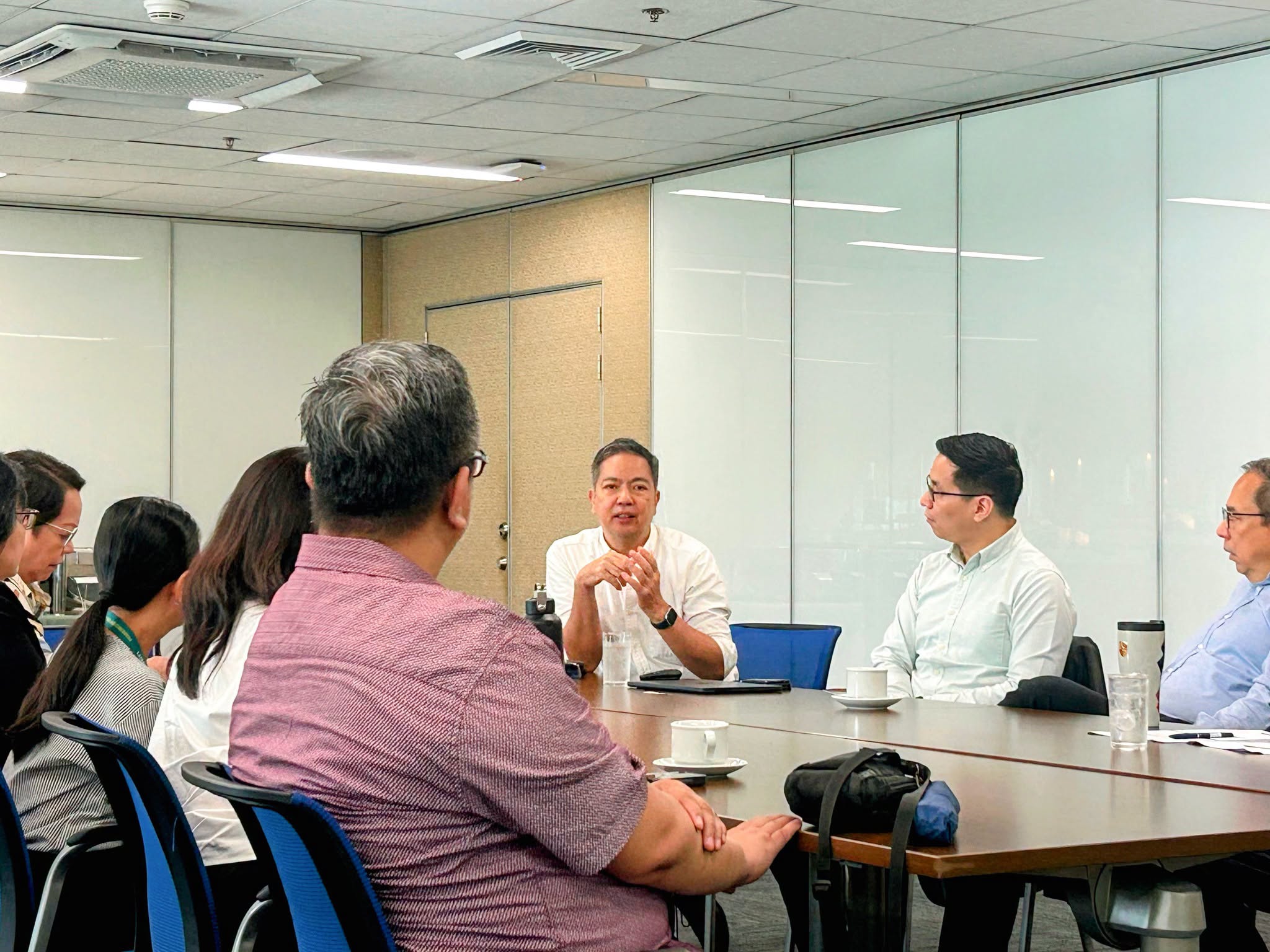
Participants also highlighted infrastructure efficiency, noting that the Homonhon Mini Dam was completed in just six months. Participants urged the private sector to leverage overlooked resources, such as hyporheic water—cleaner, natural water filtered roughly 10 feet beneath riverbeds—as a cost-effective alternative to deep groundwater extraction.
As climate risks intersect with economic competitiveness, water security must be treated as the foundation for sustainable national growth. The challenge is no longer deciding whether to work together, but executing fast enough to build the collective resilience our future and our people demand.
If you are interested to contribute to the efforts of Water Alliance, please reach out to our email at wateralliance@pbsp.org.ph

The event gathered leaders from the business sector, civil society organizations, and government agencies to reflect on the progress made in water security through private sector initiatives at the headquarters of Coca-Cola Beverages Philippines, Inc., on August 22, 2024.
Read MoreMDFI and PBSP started Operation Pa-Tubig in 2001, to provide safe and easy access to clean water in marginalized, waterless communities in the Philippines.
Read MoreFour schools in Cebu province receive rainwater harvesting systems from Nalco and PBSP
Read More